

Tissue Culture Plant Acclimation Guide

Updated: Aug 3
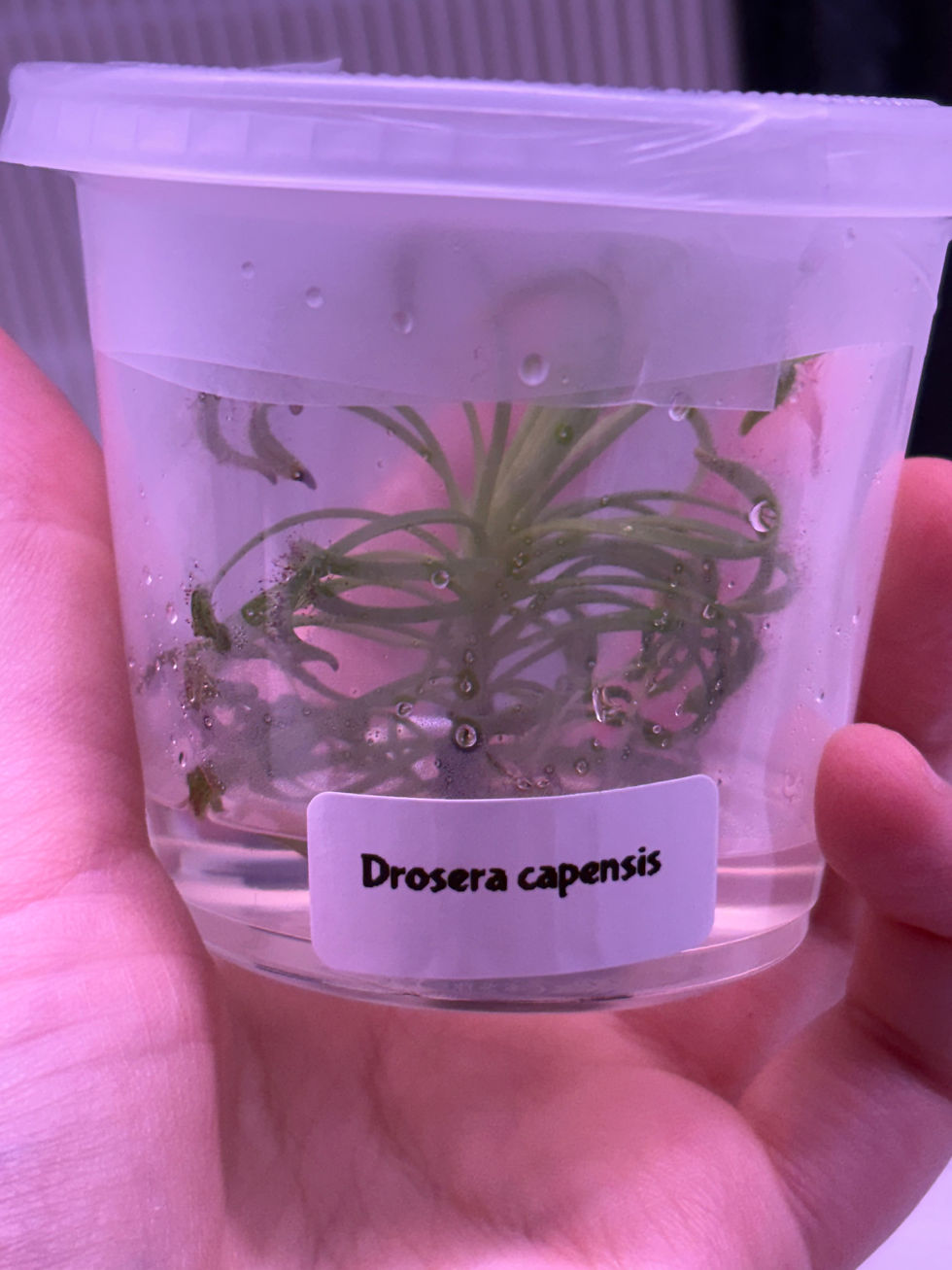
(General guidelines – NOT a one-size-fits-all! Every species (and even cultivar) can have slightly different needs. Always research your specific plant’s adult care requirements.)
Looking for acclimation kits? We have everything you need right here: https://www.biteandbloombotanicals.com/category/acclimation-kits
OR get your next new favorite plants to successfully acclimate using this guide! https://www.biteandbloombotanicals.com/category/all-products
• Do NOT skip acclimation – TC plants have lived in 100% humidity, sterile sugar-gel, and perfect lab conditions. Sudden change = shock or death. For carnivorous plants, make sure you are using an appropriate carnivorous substrate which is fertilizer free and appropriate water such as distilled, rain or reverse osmosis - NO tap. Please be aware that that variegation on tissue culture plants is never guaranteed to be stable as this is the nature of variegated plants, there is always a chance they can revert back to normal.
My process for tissue culture acclimation varies a bit by species (ie, for carnivorous plants I use carnivorous appropriate substrates and distilled or RO water only) but is otherwise generally the same.
You’ll need:
GLOVES - IMPORTANT. People don’t talk about this. You shouldn’t be touching the agar on these tc plants with your bare hands as it contains many toxic things you don’t know about and every lab uses different things - it can also contain antibiotics and plant growth hormones. None of which you want on your permeable skin.
Appropriate substrate (for aroids and begonias I use my own mix that consists of buffered coco coir, worm castings, orchid bark, perlite and charcoal) and for carnivorous I use either a good quality Chilean or New Zealand long fiber spaghnum moss for nepenthes/darlingtonia, or peat and perlite 50/50 for all other carnivorous plants.
RO or distilled water
You CAN use tap. I don’t. Tissue culture plants are sensitive and I don’t like to risk shocking them with harmful chlorines, chloramines or harsh minerals found in tap water. I believe this also reduces possible contaminants.
A pot with humidity dome, or if doing a lot, pots with a tote and clear lid to put light above, or a seed tray with a dome. I like to use the domes with adjustable vents to make venting easier.
Rooting hormone - nothing fancy. I get the cheapest brand on Amazon. What’s important is it contains the hormone IBA - that’s what facilitates the root growth.
OPTIONAL if contamination is present - Betadine/iodine or diluted 3% peroxide. NOT necessary unless contamination is present.
Steps:
Pre moisten your substrate. You don’t want it sopping wet, just sufficiently moist.
Get two bowls filled with the distilled/RO water.
In bowl #1, gently swish your deflasked tc plant in the water to dislodge the largest pieces of agar, which is the gel on the roots used to feed the plant in vitro (in the tissue culture). Use your (GLOVED!) fingers to gently massage the roots and get any remaining agar off.
IMPORTANT make sure to be thorough - any remaining agar on the roots during planting can cause root rot!
Rinse your plant again in the second bowl just to get any remaining stuff off. For begonias, I’ll usually pat their leaves dry gently with a paper towel to help prevent a tantrum. They melt when their leaves are wet. Drama queens.
Dig a little hole with your finger, a stick, a pen, whatever in your substrate and put a tiny bit of rooting hormone in, then gently bury the roots of the plant making sure to press down firmly but not hard enough to make the soil compacted. You want the roots to make contact with the soil without compacting it into a rock to prevent oxygen flow.
Put the dome over your plant and give it 8 hours of lower light to start with, can gradually increase light after about a week. Monitor for signs of new growth.
A note on time it takes:
I don’t follow any hard or fast rule. Some people will tell you it takes 8 weeks. Some will say 6. You’re better off following each plants own timeline. If you keep your tissue cultures in 100% humidity and they sprout new leaves, and those new leaves get wet before they’re hardened off it can cause them to melt. So I start venting the domes as soon as I see signs of new growth.
Following this method, I’ve had some plants acclimated in as little as two weeks with no problems. Most are fully acclimated and domes removed growing normally in 4 weeks or less.
A note on fluval stratum:
I don’t use it. I think it sucks for acclimating TC. I’ve had nothing but bad experiences with it - it doesn’t contain the proper nutrients for terrestrial plants, so it stunts their growth, it’s meant for aquatic plants in aquariums. I also don’t believe it provides enough air flow even mixed with perlite or drainage so it causes mildew and melting/rotting problems.
Looking for acclimation kits? We have everything you need right here: https://www.biteandbloombotanicals.com/category/acclimation-kits
OR get your next new favorite plants to successfully acclimate using this guide! https://www.biteandbloombotanicals.com/category/all-products
Happy planting!
Final reminder
This is a general protocol that works for most tissue culture plants. However, plants may need tweaks (lower humidity faster, different media, cooler nights, etc.). Always double-check care for YOUR exact plant after acclimation.
Happy growing – patience is key!


Comments