

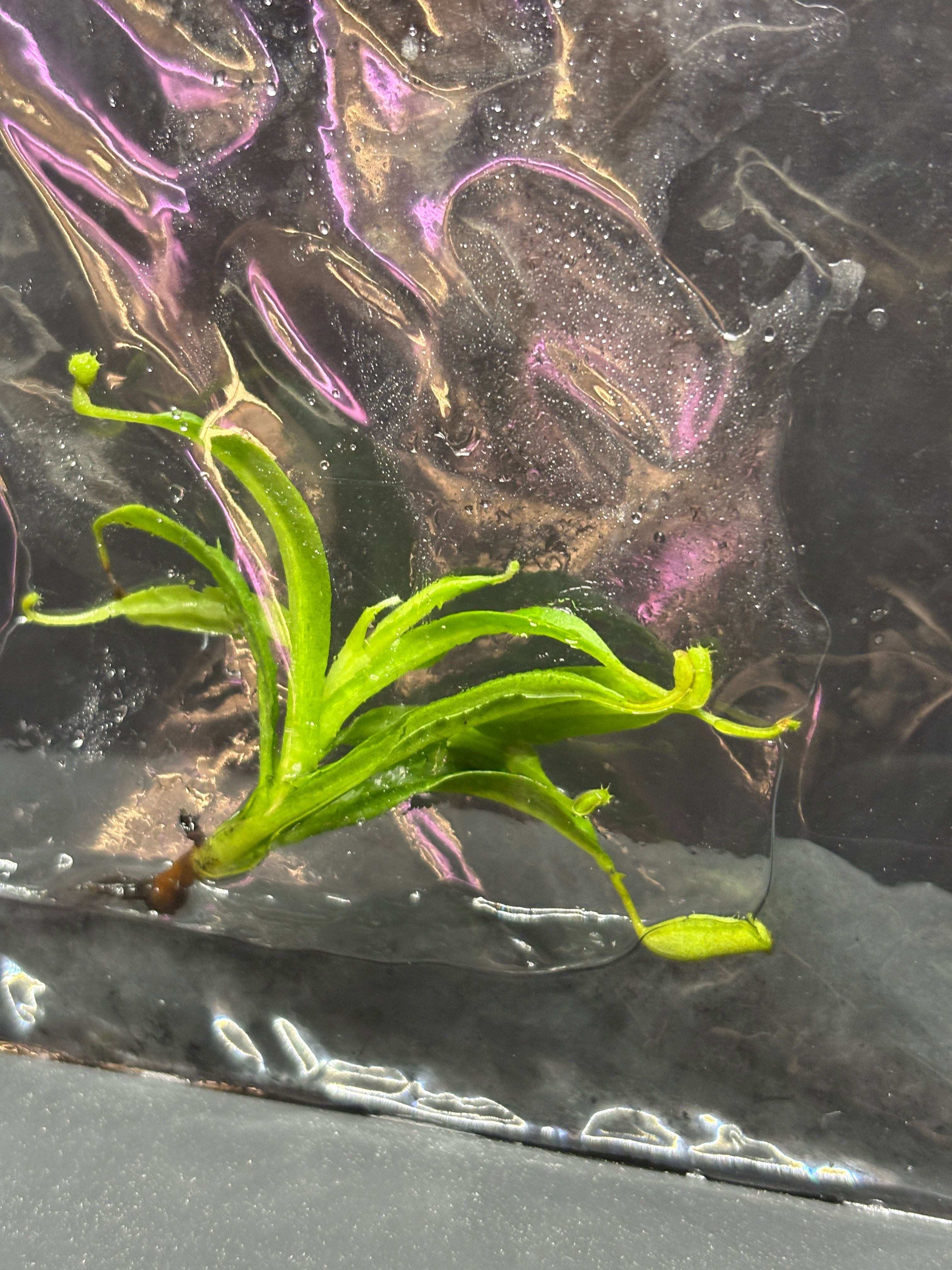

Nepenthes ventricosa Pitcher Plant Tissue Culture Plant – Seller’s Choice
Add a graceful and dependable tropical pitcher plant to your collection with Nepenthes ventricosa tissue culture plant, offered as Seller’s Choice. You’ll receive a healthy, hand-selected plantlet from our premium stock, chosen for strong growth, elegant form, and reliable pitcher production.
Why Nepenthes ventricosa is Truly Special
Elegant, Slender Pitchers — Produces beautifully shaped pitchers with a narrow waist and flared peristome, often displaying soft green tones flushed with pink to deep red.
Beginner-Friendly Species — One of the easiest true species to grow, known for its adaptability and tolerance of typical indoor conditions.
Consistent Pitcher Production — Readily forms pitchers even without extremely high humidity, making it more forgiving than many other Nepenthes.
Compact & Attractive Growth — Maintains a tidy growth habit before vining, making it ideal for windowsills, ტერariums, or small growing spaces.
Tissue Culture Excellence — Lab-propagated for pest-free, disease-free plants with strong vigor, uniform growth, and excellent overall quality.
Nepenthes ventricosa is a standout species that combines refined beauty with easy care, making it perfect for both beginners and collectors.
Easy Care Guide for Nepenthes ventricosa
This tropical pitcher plant thrives in stable indoor conditions:
LightBright, indirect light is ideal. A bit of gentle morning or late afternoon sun can enhance pitcher coloration without causing leaf burn.
WaterUse only distilled water, rainwater, or reverse osmosis (RO) water. Keep the substrate evenly moist but not soggy—ensure good drainage at all times.
SoilUse a light, airy mix such as long-fiber sphagnum moss, or a blend of sphagnum with perlite, orchid bark, or coco husk.
TemperaturePrefers moderate temperatures (65–80 °F / 18–27 °C). It can tolerate slight drops at night but does not require dormancy.
HumidityModerate humidity (40–70%) is sufficient, though higher humidity can promote larger and more frequent pitcher development.
FeedingPitchers will naturally catch insects. Indoor plants may be fed occasionally with small insects or very diluted fertilizer—avoid overfeeding.
Note:Some pitchers may dry out during shipping or while acclimating to a new environment. This is normal, and the plant will produce new pitchers once settled.
With proper care, your Nepenthes ventricosa will grow steadily, produce elegant pitchers, and become a refined focal point in your carnivorous plant collection.
Ready to grow a classic and elegant pitcher plant?Limited quantities of Nepenthes ventricosa Pitcher Plant Tissue Culture Plant – Seller’s Choice are available. Order now to receive a healthy, lab-grown plant delivered safely to your door.
Questions? Message me — happy to help with acclimation tips!
Thanks for supporting small carnivorous plant growers! 🌱🪰
Check us out on social media - we're on Tiktok, Instagram, & Facebook @biteandbloombotanicals
Nepenthes Ventricosa Pitcher Plant Tissue Culture Seller's Choice
(General guidelines – NOT a one-size-fits-all! Every species (and even cultivar) can have slightly different needs. Always research your specific plant’s adult care requirements.)
• Do NOT skip acclimation – TC plants have lived in 100% humidity, sterile sugar-gel, and perfect lab conditions. Sudden change = shock or death. For carnivorous plants, make sure you are using an appropriate carnivorous substrate which is fertilizer free and appropriate water such as distilled, rain or reverse osmosis - NO tap. Please be aware that that variegation on tissue culture plants is never guaranteed to be stable as this is the nature of variegated plants, there is always a chance they can revert back to normal.
• Step 1 – Unboxing (Day 1)
• Open the package in low light / shade.
• Gently rinse off ALL agar/jelly under lukewarm water (use distilled or rainwater if your tap is hard/fluoridated).
• Remove any dead or black leaves with sterilized scissors.
• Step 2 – First 2–4 weeks (High-humidity phase)
• Pot in a very airy, sterile mix (e.g., pure sphagnum moss, 50/50 fluval stratum/perlite.
• Water with distilled, RO, or rainwater until established (tap water minerals can burn tiny roots).
• Place inside a clear plastic box, propagation dome, or large clear bag to keep humidity 85–100%.
• Bright indirect light only (50–150 µmol/m²/s or normal room light, no direct sun).
• Temperature 22–27 °C (72–80 °F); avoid cold windowsills.
• Ventilate 5–15 min daily to prevent mold; increase venting time every few days.
• Step 3 – Gradual hardening off (Weeks 4–8)
• Slowly increase daily venting time (add 15–30 min every 2–3 days).
• When new growth appears and plant no longer wilts when uncovered for hours, remove dome completely.
• Very slowly increase light levels over 2–3 weeks (never jump to direct sun).
• Step 4 – Normal care
• Once fully hardened (usually 6–10 weeks), treat as a normal juvenile plant of that species.
• Switch to the species-specific soil, pot, fertilizer, and light requirements.
Common mistakes that kill TC plants
• Planting straight into regular potting mix or heavy soil
• Using cold tap water or fertilizing too early
• Putting in direct sun or dry household air on day 1
• Sealing in a dome forever (leads to rot)
Final reminder
This is a general protocol that works for most tissue culture plants. However, plants may need tweaks (lower humidity faster, different media, cooler nights, etc.). Always double-check care for YOUR exact plant after acclimation.
Happy growing – patience is key!
