

Drosera Spatulata - Spoon-Leaf Sundew

Updated: Feb 8

Introduction and Origins
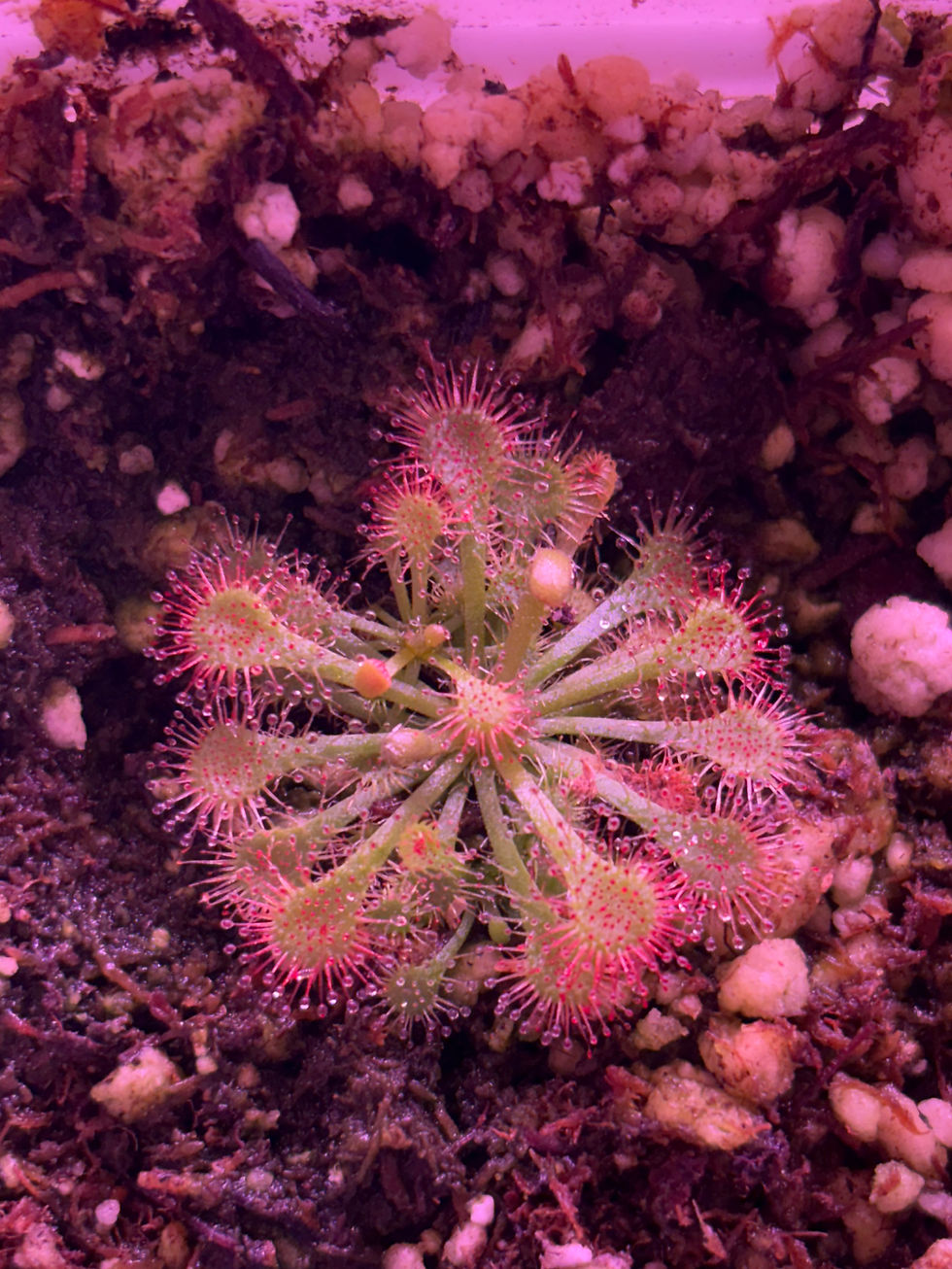
Drosera spatulata, commonly known as the Spoon-Leaf Sundew, is a fascinating carnivorous plant belonging to the Droseraceae family. This compact sundew is prized by enthusiasts for its rosette-forming habit, with spoon-shaped leaves covered in sticky, glandular tentacles that trap and digest small insects for nutrients. The plant typically grows to about 2-5 cm in diameter, producing delicate pink or white flowers on tall scapes during the growing season. As a tropical species, it does not require a dormancy period, making it well-suited for year-round indoor cultivation.
Native to a wide range of habitats, Drosera spatulata originates from regions including Australia, Tasmania, New Zealand, Southeast Asia (such as Indonesia, Malaysia, the Philippines, and Papua New Guinea), southern China, Japan, Hong Kong, Taiwan, Borneo, and Micronesia. In the wild, it thrives in boggy, nutrient-poor environments like swamps, seeps, and moist grasslands, often in acidic, sandy or peaty soils at various elevations. Its broad distribution has led to numerous forms, varieties, and cultivars, such as 'Tamlin' or those from Fraser Island, each with slight adaptations to local conditions.
Light Requirements
Drosera spatulata requires bright, direct light to thrive indoors and develop its characteristic red coloration on the tentacles and leaves. Aim for at least 6-8 hours of direct sunlight daily, such as from a south-facing window. If natural light is insufficient, supplement with artificial grow lights like LED or fluorescent T-8 bulbs on a 14-16 hour photoperiod, positioned 6-12 inches above the plant. Inadequate light can lead to etiolated (stretched) growth and reduced dew production, making the plant less effective at catching prey. Most forms will turn vibrant red under intense lighting, enhancing their aesthetic appeal.
Watering
Use only pure, mineral-free water such as rainwater, distilled water, or reverse osmosis (RO) water—tap water often contains dissolved solids that can accumulate and harm the plant over time. Employ the tray method: place the pot in a shallow tray filled with 1-2 cm of water, allowing the soil to wick up moisture while keeping the media consistently moist but not waterlogged. Let the tray dry out briefly every few days to prevent root rot, especially in cooler conditions. Overwatering can cause fungal issues, while underwatering may lead to wilting—monitor closely and adjust based on environmental factors like humidity and temperature.
Soil and Potting
This species demands an acidic, nutrient-poor soil mix to mimic its natural boggy habitat. A standard mix is 1:1 peat moss to silica sand or perlite, or pure long-fibered sphagnum moss (LFS) with optional perlite for better drainage. Rinse the media thoroughly before use to remove any dust or impurities. Avoid enriched potting soils, garden soil, or fertilizers, as excess nutrients can burn the roots and kill the plant. Use plastic, glazed ceramic, or deep pots (at least 4-6 inches) with drainage holes to prevent water stagnation. Repot every 1-2 years in spring, handling roots gently as the plant tolerates disturbance well.
Temperature and Humidity
As a subtropical to tropical plant, Drosera spatulata prefers temperatures between 45-90°F (7-32°C), with ideal daytime highs of 70-85°F (21-29°C) and nights not dropping below 50°F (10°C). It can tolerate brief freezes if established but thrives in stable indoor conditions year-round without dormancy. Maintain humidity at 50% or higher; use a humidity tray, terrarium, or enclosed grow space to retain moisture, especially in dry indoor environments. Good air circulation from a gentle fan helps prevent mold while keeping dew on the leaves sticky.
Feeding
In nutrient-poor soils, Drosera spatulata supplements its diet by capturing insects. Indoors, where prey may be scarce, you can hand-feed small insects like fruit flies or gnats every 1-2 weeks to promote faster growth and flowering. Use tweezers to place live or rehydrated dried insects on the leaves; avoid overfeeding to prevent mold. The tentacles will curl around the prey within hours, digesting it over days. Feeding is optional if the plant receives ample light, as it can photosynthesize effectively, but it enhances vigor. Never use meat, dairy, or human food, and skip fertilizers entirely.
Propagation
Drosera spatulata is easy to propagate, making it ideal for beginners.
Seeds: Sow on the soil surface without covering; no cold stratification needed. Germination occurs in 2-4 weeks under bright light and high humidity. Plants reach maturity in under a year with regular feeding.
Leaf Cuttings: Float healthy leaves in distilled water or place on moist media under lights. Roots and plantlets form in weeks.
Root Cuttings: Cut slender roots into segments and lay on media; new plants sprout readily.
Divisions: Gently separate clumps during repotting; each division establishes quickly.
Common Issues and Troubleshooting
Brown or Black Leaves: Often due to low humidity, poor water quality, or over-drying. Trim affected parts and adjust care.
Lack of Dew: Caused by low light, low humidity, or mineral buildup. Increase light/humidity and flush soil with pure water.
Pests: Aphids or fungus gnats can infest; rinse with water or use neem oil sparingly.
Root Rot: From soggy soil; ensure good drainage and let tray dry periodically.
Slow Growth: Check for insufficient light or feeding; repot if roots are crowded.
With proper care, Drosera spatulata can form dense clumps and flower prolifically, providing an engaging addition to your indoor plant collection. Always observe your plant and adjust based on its response, as individual conditions vary.


Comments